


Free Roskam jazz concerts
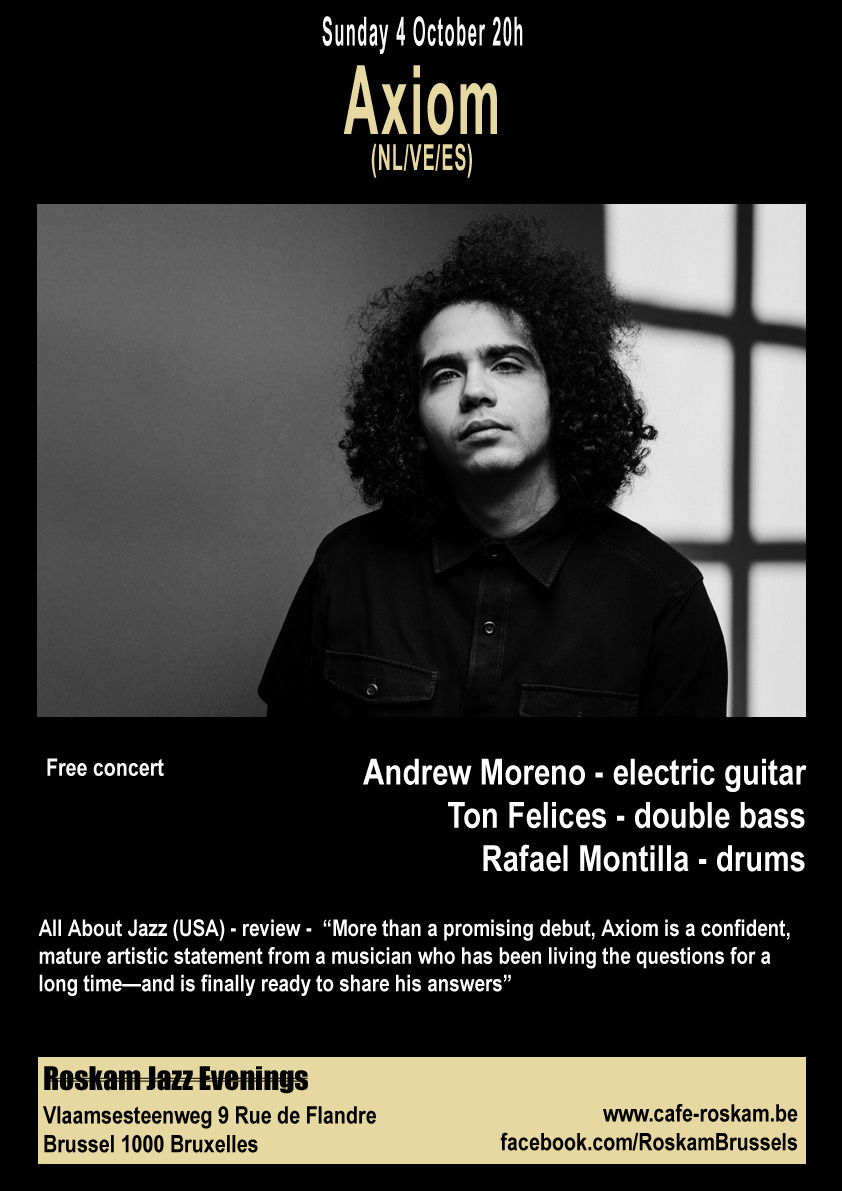
Axiom (NL/VE/ES)
4 October 2026 E 20:00
All About Jazz (USA) - review -
“More than a promising debut, Axiom is a confident, mature artistic statement from a musician who has been living the questions for a long time—and is finally ready to share his answers”
Jazzflits 438 - review-
“We jazz lovers have known for years that you can do a lot with a guitar, but Andrew Moreno fully explores the instrument. It is not easy to pigeonhole his music, but that is not necessary. The music on this CD is an exciting musical journey with intense, but also with many serene moments. Andrew Moreno's trio paints with sound, and the possibilities on his guitar allow him to evoke a multitude of atmospheres.” Sjoerd van Aelst (NL)
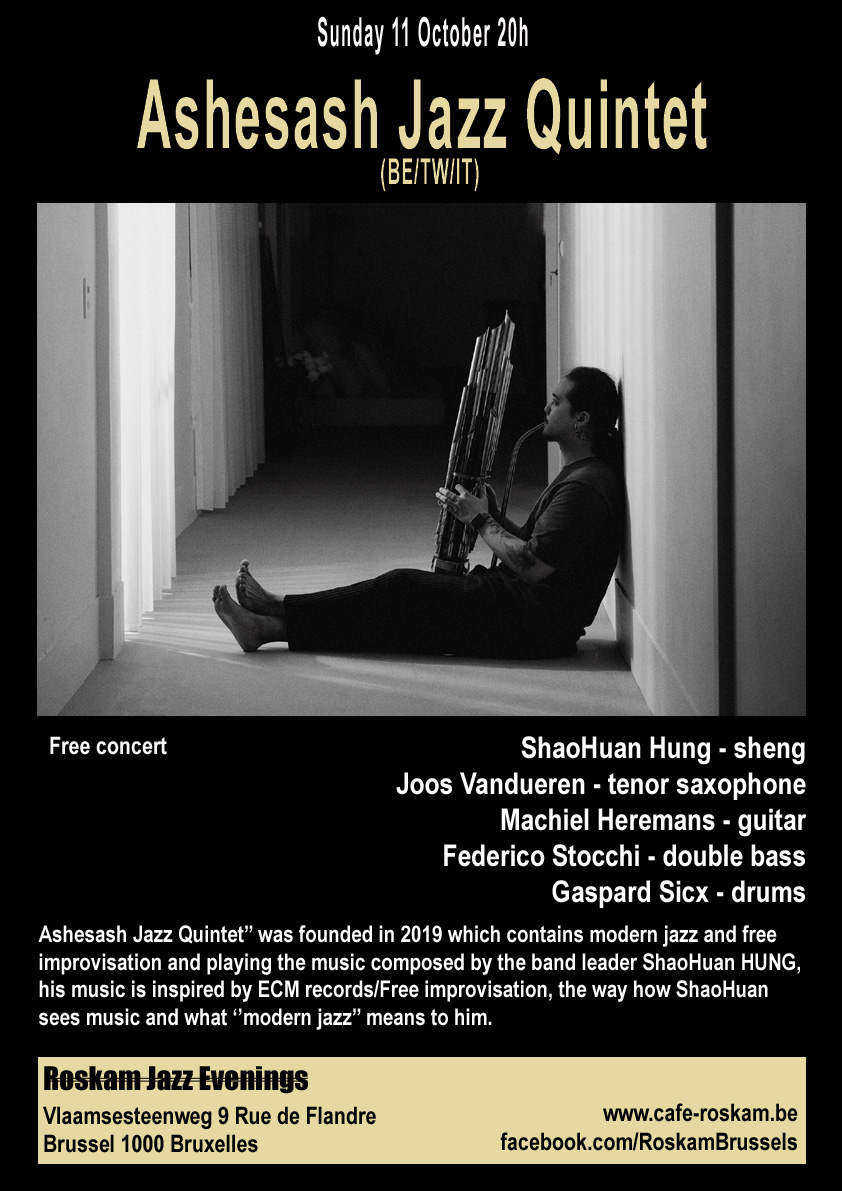
Ashesash Jazz Quintet (BE/TW/IT)
11 October 2026 E 20:00
ShaoHuan Hung - sheng
Joos Vandueren - tenor saxophone
Machiel Heremans - guitar
Federico Stocchi - double bass
Gaspard Sicx - drums
‘’Ashesash Jazz Quintet’’ was founded in 2019 which contains modern jazz and free improvisation and playing the music composed by the band leader ShaoHuan HUNG, his music is inspired by ECM records/Free improvisation, the way how ShaoHuan sees music and what ‘’modern jazz’’ means to him.
ShaoHuan is from Taiwan who plays the Sheng(traditional Chinese instrument) and based in Brussels, as well the first Sheng player who brought the instrument into modern Jazz. In the band he puts the Sheng together with TenorSax, Guitar, Bass and drums, by his imagination and also his multi-music style background to re-color the modern sound in his works.’’
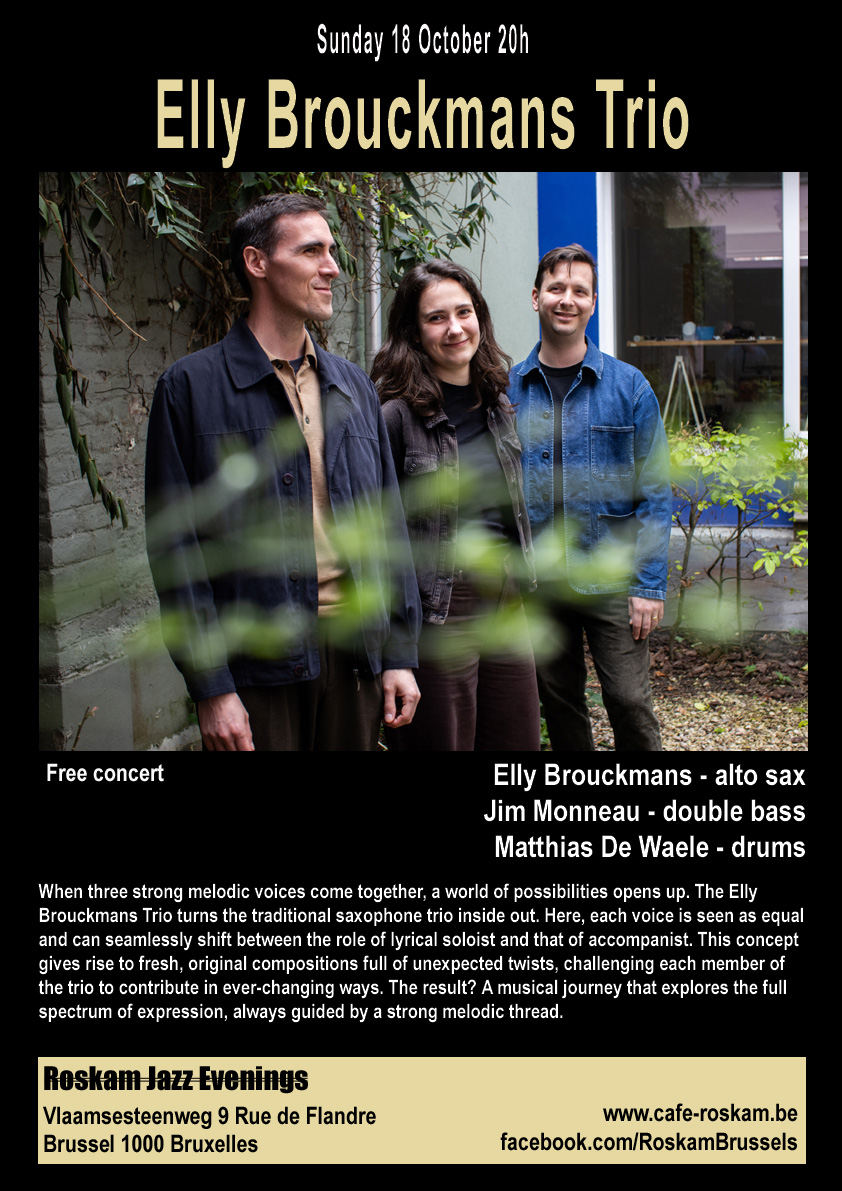
Elly Brouckmans Trio
18 October 2026 E 20:00
When three strong melodic voices come together, a world of possibilities opens up. The Elly Brouckmans Trio turns the traditional saxophone trio inside out. Here, each voice is seen as equal and can seamlessly shift between the role of lyrical soloist and that of accompanist. This concept gives rise to fresh, original compositions full of unexpected twists, challenging each member of the trio to contribute in ever-changing ways. The result? A musical journey that explores the full spectrum of expression, always guided by a strong melodic thread.
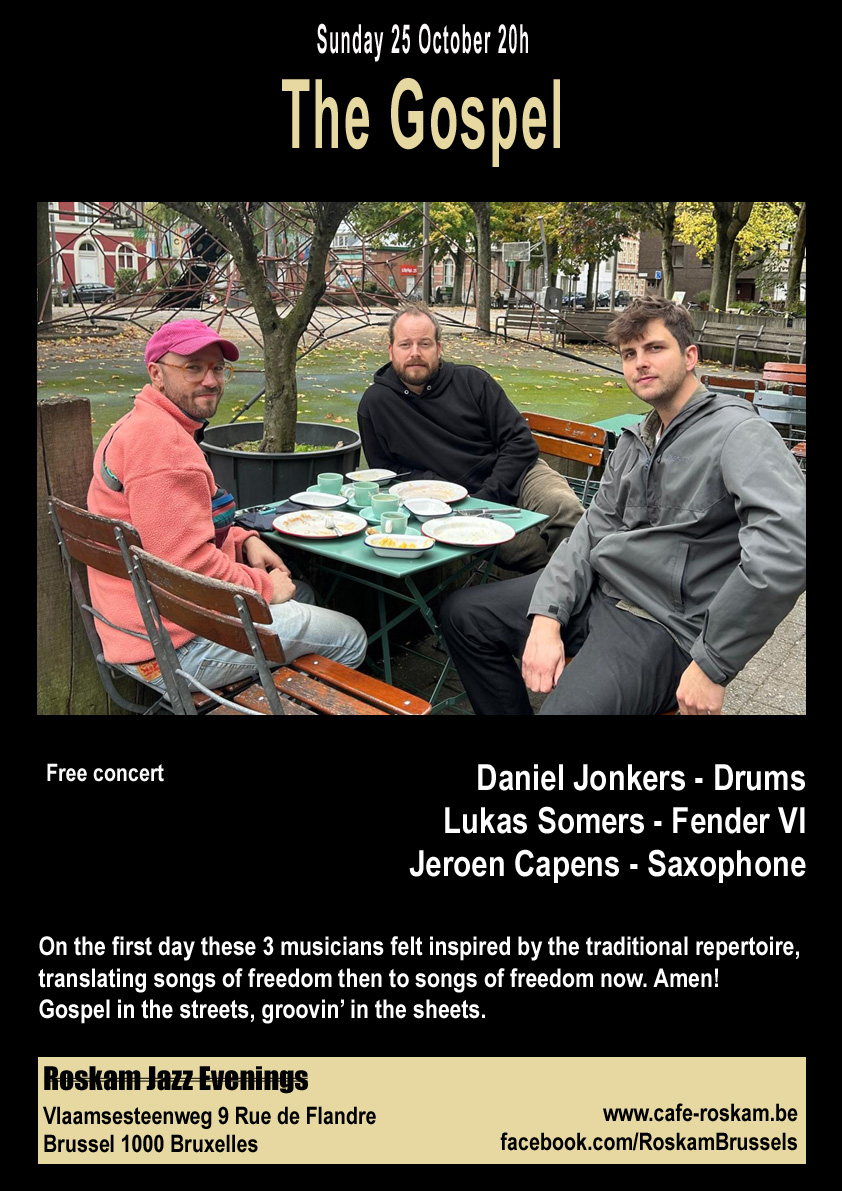
The Gospel
25 October 2026 E 20:00
On the first day these 3 musicians felt inspired by the traditional repertoire, translating songs of freedom then to songs of freedom now. Amen!
Gospel in the streets, groovin’ in the sheets.
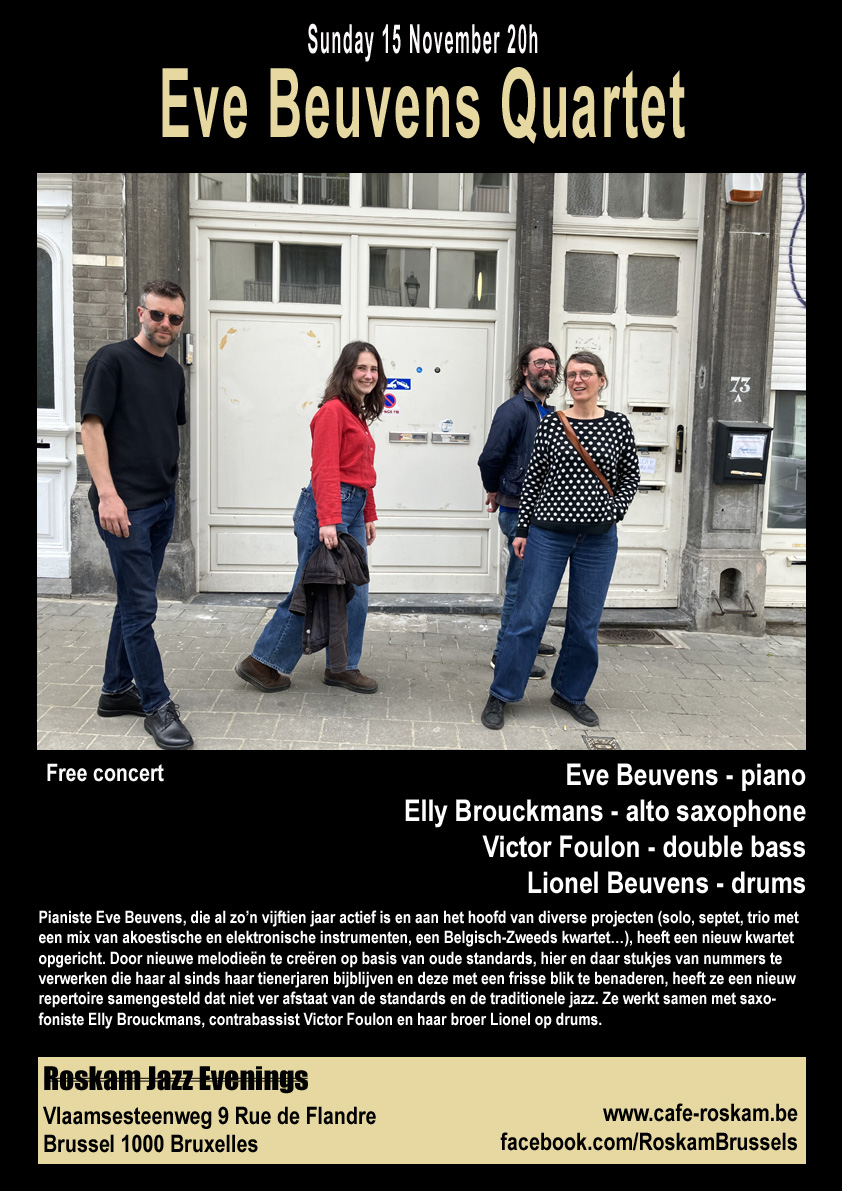
Eve Beuvens Quartet
15 November 2026 E 20:00
Eve Beuvens - piano
Elly Brouckmans - alto saxophone
Victor Foulon - double bass
Lionel Beuvens - drums
Pianiste Eve Beuvens, die al zo’n vijftien jaar actief is en aan het hoofd van diverse projecten (solo, septet, trio met een mix van akoestische en elektronische instrumenten, een Belgisch-Zweeds kwartet…), heeft een nieuw kwartet opgericht. Door nieuwe melodieën te creëren op basis van oude standards, hier en daar stukjes van nummers te verwerken die haar al sinds haar tienerjaren bijblijven en deze met een frisse blik te benaderen, heeft ze een nieuw repertoire samengesteld dat niet ver afstaat van de standards en de traditionele jazz. Ze werkt samen met saxofoniste Elly Brouckmans, contrabassist Victor Foulon en haar broer Lionel op drums.
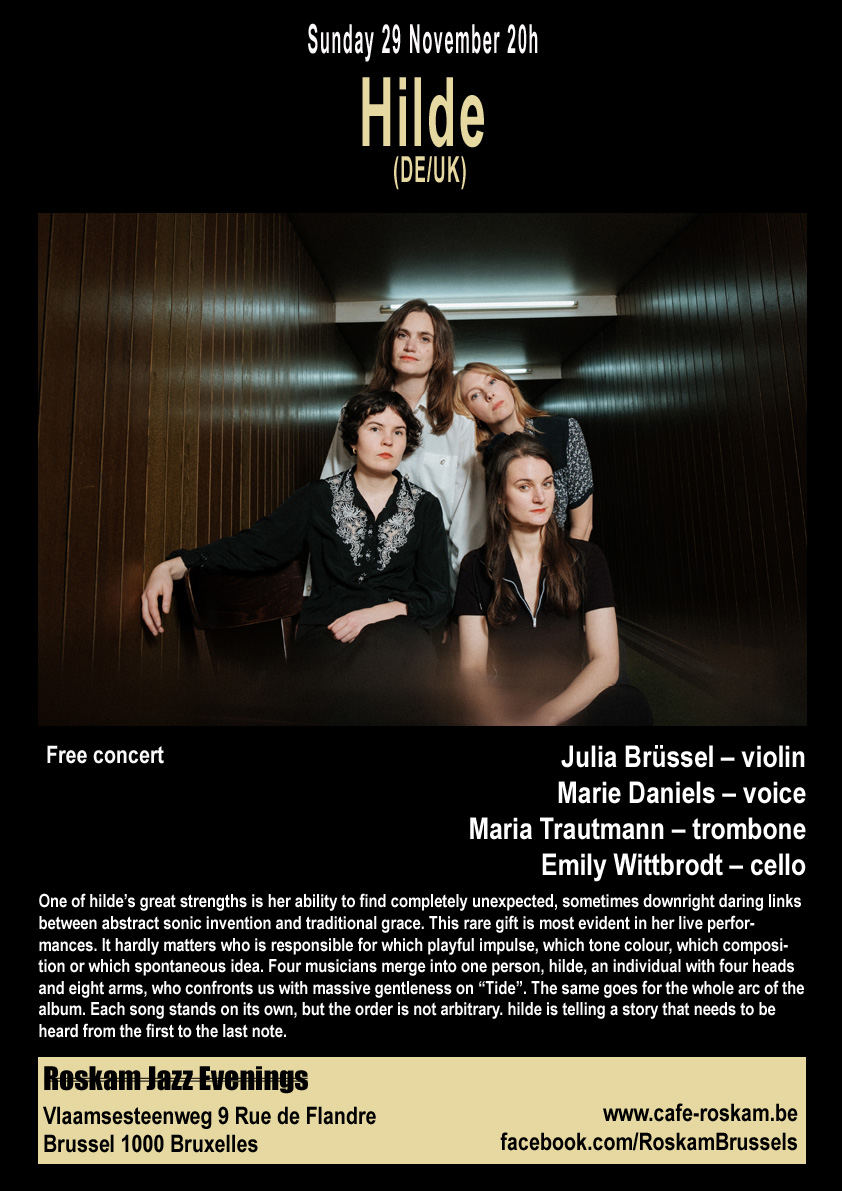
Hilde (DE/UK)
29 November 2026 E 20:00
Julia Brüssel – violin
Marie Daniels – voice
Maria Trautmann – trombone
Emily Wittbrodt – cello
One of hilde’s great strengths is her ability to find completely unexpected, sometimes downright daring links between abstract sonic invention and traditional grace. This rare gift is most evident in her live performances. It hardly matters who is responsible for which playful impulse, which tone colour, which composition or which spontaneous idea. Four musicians merge into one person, hilde, an individual with four heads and eight arms, who confronts us with massive gentleness on “Tide”. The same goes for the whole arc of the album. Each song stands on its own, but the order is not arbitrary. hilde is telling a story that needs to be heard from the first to the last note.
Text by Wolf Kampmann